


Picture a company listed on the Bucharest Stock Exchange that has just been left with a vacant non-executive director seat. A year ago, the choice would probably have come from the same circle of candidates as usual. Today, the process follows a new, regulated rule: if two candidates are equally qualified, priority goes to the one from the underrepresented sex on that board. And if a rejected candidate can prove they had equivalent qualifications, the burden of proving otherwise falls on the company, not on the candidate.
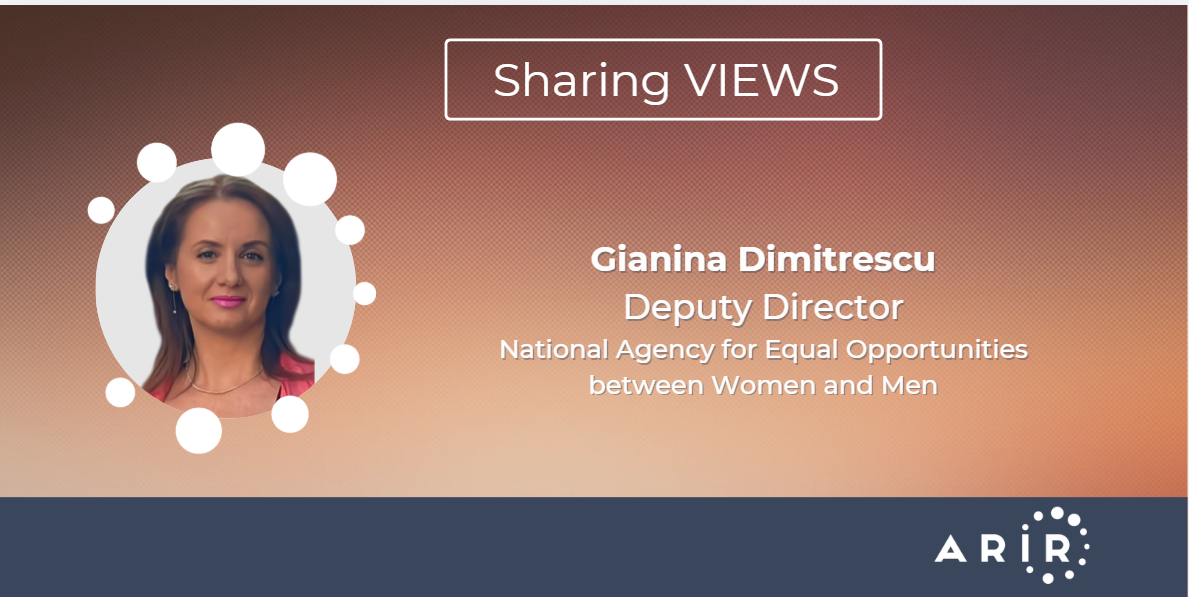
What this change means in concrete terms for listed companies, where Romania stands after the first year since transposing the EU Directive, and what steps issuers can take next were the themes of a presentation given at ARIR’s monthly meeting by Gianina Dimitrescu, Deputy Director of the Strategy, Policy, Programs and Partnerships Directorate at the National Agency for Equal Opportunities between Women and Men (ANES). The presentation examined the impact of gender balance policies on companies listed on the Bucharest Stock Exchange and their implications for selection, reporting and corporate governance processes.
Law no. 11/2025, through which Romania transposed Directive (EU) 2022/2381 on gender balance among directors of listed companies, introduces new obligations for large companies listed on the Bucharest Stock Exchange. Beyond reaching certain representation targets, the new provisions bring changes to the process of selecting board members, to progress reporting, and to dialogue with investors.
For the companies concerned, the goal is to reach one of two thresholds set out in the legislation: at least 40% of non-executive director positions held by people from the underrepresented sex, or at least 33% of all director positions, executive and non-executive combined.
Where a company meets neither of these targets, it must set out and publish measures for reaching them. At the same time, the selection process takes on greater importance: for candidates with equivalent qualifications, the law provides for priority to be given to the candidate from the underrepresented sex, in line with clear, neutral and transparent criteria.
Why it matters
Data presented in July 2026[1] by the National Agency for Equal Opportunities between Women and Men (ANES) show that, of the 51 large companies listed on the BVB covered by the new requirements, eight meet the 40% threshold for non-executive directors, and nine meet the 33% threshold for the total number of director positions.
Across the companies analyzed, women hold an average of 19.35% of director seats. The gap between non-executive and executive positions is significant, however: the share reaches around 20% for non-executive directors, compared with just 1.79% for executive directors.
Romania currently sits below the EU average, where women hold 38.2% of non-executive director positions and 33.6% of all director positions. According to the data presented, Romania ranks 20th out of the 27 member states for gender balance in the management structures analyzed. (Data taken from the Biennial report under Article 13(1) of Directive 2022/2381 on gender balance -Layout for Member States’ biennial report (starting from December 2025) – Pursuant to Article 13(1) of Directive 2022/2381 on gender balance in corporate boards).
The main difficulties identified so far are linked to the challenge of finding suitable candidates in certain sectors, which calls for a transition and candidate-development period.
Reporting becomes part of the corporate governance process
The new provisions are not limited to setting targets. Companies in scope must publish annual information on the representation of women on boards of directors and on the measures taken to meet the legal objectives.
By July 15, companies must report the proportion of women among non-executive directors, as well as their proportion within total management.
For listed companies, this information thus falls within the broader scope of corporate governance and transparency toward the market. Board structure, the nomination process and the criteria used in selecting directors are all followed by shareholders and investors, and can become relevant in assessing a company’s governance practices.
Clearer selection processes and a broader candidate pool
The practical guide produced by ARIR together with ANES proposes a series of measures through which companies can integrate gender-balance objectives into their governance processes.
A first element is the direct involvement of the board chair in developing and mentoring board members. In parallel, a candidate’s profile should be defined before the recruitment process begins, based on clear competency and experience criteria, formulated neutrally and applied consistently to all candidates.
Broadening the recruitment pool beyond traditional networks is another recommended direction, including through cooperation with executive search firms and by identifying new sources of eligible candidates.
Progress monitoring must be backed by clear indicators, validated at the company’s management level, while information on the nomination process and on how the board’s composition evolves can be woven into dialogue with shareholders and investors.
Gender balance: between compliance and governance quality
European experience shows that introducing targets and reporting obligations can accelerate change in companies’ management structures. According to the Gender Equality Index compiled by EIGE, the “power” domain, which includes women’s participation in economic decision-making, has seen faster progress in states that have introduced mandatory measures.
For Romania’s capital market, the coming reporting cycles and upcoming board mandate renewals will show how quickly the new requirements are reflected in the actual make-up of listed companies’ management.
For issuers, preparing transparent nomination, selection and reporting processes well in advance reduces the risk of adjustments made purely for compliance’s sake, and folds diversity objectives into current corporate governance mechanisms.
Six things companies can do now
The practical guide produced by ARIR in partnership with ANES starts from a simple idea: change also depends on how well a company prepares its selection process in advance.
The first step is genuine involvement from leadership. The board chair can directly shape the organizational culture, including through training programs, mentoring and guidance for board members. Then come the objectives: the company needs to know what it is aiming for on gender balance, both at board level and within the executive team.
How a candidate’s profile is built matters too. Essential criteria – “must have” – and preferred ones – “nice to have” – should be set before recruitment begins, framed neutrally and applied consistently. At the same time, the candidate pool can be widened beyond traditional circles, including through executive search firms that work with inclusive criteria and through programs that develop future candidates for leadership positions.
Just as important is dialogue with the market. Shareholders and investors need to understand how directors are nominated and selected, not just see the end result. And progress needs to be tracked through clear indicators and reported transparently. The guide also recommends separately monitoring the share of the underrepresented sex among non-executive directors and across the management structure as a whole.
What comes next
The first year after transposing the Directive shows a market in transition, one that has begun taking steps toward meeting the targets set. Many companies are still operating under mandates and management structures set before the new rules took effect, so more visible changes are expected with the coming appointment and board-renewal cycles.
The next reporting cycle will matter precisely because it will allow, for the first time, a comparison between periods. Reporting is thus not just a compliance obligation: it makes progress visible to the ASF, the BVB, shareholders and investors, and shows how seriously companies are preparing for the next stages.
European data also offer a clue as to where the market may be heading. The “power” domain of the Gender Equality Index has risen by 9 points since 2020, with progress concentrated especially in states that have introduced binding legislation and targets. Romania now has this framework in place. The next challenge is for the new rules, the reporting and the dialogue between companies and investors to actually show up in board composition and, above all, in the executive leadership pipeline.
[1] Biennial report under Article 13(1) of Directive 2022/2381 on gender balance